

Updated 3 weeks ago
How to Choose the Right Flexible Packaging Bag for Your Products
Fast Sincere

Choosing the right flexible packaging bag involves more than selecting an attractive design. Bag structure, material properties, sealing performance, filling compatibility, and shelf presentation all influence how effectively packaging protects and displays your products. This guide explains the key factors to consider when selecting flexible packaging bags for food products, from coffee and bakery goods to nuts, candy, and dry snacks.
1. Understand Your Product’s Packaging Requirements
Before comparing packaging styles, identify the physical characteristics of the product you intend to pack.
Different food products have different requirements for moisture protection, oxygen resistance, mechanical strength, and filling conditions.
Product Characteristics to Consider
- Product Form: Powders, granules, whole beans, solid snacks, and irregularly shaped foods behave differently during filling and storage.
- Moisture Sensitivity: Biscuits, crackers, and certain dry snacks require suitable moisture barriers to maintain their intended texture.
- Oxygen Sensitivity: Coffee, nuts, and products containing oils may require higher oxygen barrier performance.
- Product Weight: Heavier contents place additional demands on the bottom construction, side seals, and overall bag strength.
- Shelf Life: Storage duration and environmental conditions help determine the required packaging material structure.
For example, a transparent bag may be suitable for displaying certain bakery products, while roasted coffee beans often require higher-barrier packaging to help protect their aroma and freshness.
Understanding these requirements provides a practical starting point for choosing the appropriate packaging structure.
2. Compare Different Types of Flexible Packaging Bags
Flexible packaging bags are available in different shapes and constructions. Each format offers particular advantages for filling, storage, retail display, and product presentation.
Block Bottom Bags
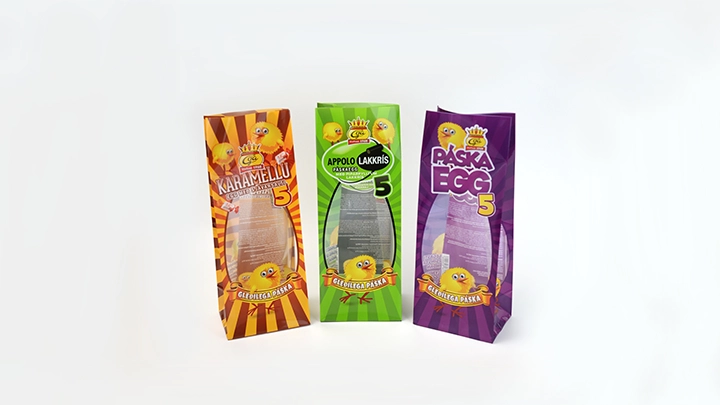
Block bottom bags have a flat-bottom structure designed to stand upright when filled. Their rectangular base provides a stable presentation, while the front and back surfaces offer space for branding and product information.
These bags are commonly used for biscuits, candy, baked goods, and other dry food products.
Depending on the construction, block bottom bags can incorporate clear film, custom printing, windows, and suitable closure features.
Cross Bottom Bags
Cross bottom bags use a bottom construction that unfolds to create a base when filled.
They are often considered for lightweight bakery products, confectionery, and other applications where a structured bag shape and upright presentation are desirable.
The exact bottom-folding and sealing construction should be confirmed with the manufacturer.
Side Gusset Bags
Side gusset bags feature expandable folds along both sides. These gussets open as the bag is filled, increasing internal volume without requiring a permanently expanded structure.
They are frequently considered for coffee beans, tea, powders, and other dry products.
Side gusset packaging can also provide a relatively compact shape for storage and transportation before filling.
Box Bottom Bags
Box bottom bags feature a defined, rectangular base and a structured appearance.
They can provide broad printable surfaces and upright retail presentation for coffee, snacks, nuts, and other packaged food products.
The terms box bottom and block bottom are sometimes used interchangeably in the packaging industry. Specific bottom-seal construction, side gussets, and manufacturing methods should therefore be confirmed rather than assumed from the product name alone.
Doypacks (Stand Up Pouches)
Doypacks are stand up pouches with a bottom gusset that expands when the bag is filled.
Their flexible structure accommodates many packaging applications, including snacks, nuts, candy, tea, and pet food.
Depending on the design, resealable zippers, tear notches, clear windows, and other features can be incorporated to improve convenience and usability.
Flexible Packaging Bag Comparison
| Bag Type | Main Structural Feature | Typical Applications |
|---|---|---|
| Block Bottom Bags | Flat, rectangular bottom | Biscuits, confectionery, bakery goods |
| Cross Bottom Bags | Folded bottom that opens during filling | Bakery products, candy, lightweight dry foods |
| Side Gusset Bags | Expandable side folds | Coffee, tea, powders, dry goods |
| Box Bottom Bags | Structured, rectangular base | Coffee, nuts, snacks |
| Doypacks | Expandable bottom gusset | Nuts, candy, snacks, pet food |
The appropriate bag structure depends on the product’s dimensions, weight, filling method, display requirements, and preferred appearance.
3. Select Suitable Packaging Materials
Material selection directly affects product protection, sealing compatibility, package appearance, and manufacturing performance.
Common flexible packaging materials include BOPP, CPP, PE, PET, and combinations of compatible films or paper-based layers.
Common Packaging Material Options
BOPP (Biaxially Oriented Polypropylene)
BOPP is commonly used in flexible packaging where printability, stiffness, and visual clarity are important. It is frequently used as an outer layer in printed laminate structures.
CPP (Cast Polypropylene)
CPP offers heat-sealing properties and is used in suitable packaging structures as a sealant layer. Its properties vary according to grade and production requirements.
PE (Polyethylene)
PE films are widely used in flexible packaging and can provide sealing performance and flexibility. Different grades are selected according to the intended packaging application.
PET (Polyethylene Terephthalate)
PET film offers dimensional stability, mechanical strength, and a suitable printing surface. It is often used as an outer layer in multilayer flexible packaging.
Kraft Paper and Composite Structures
Kraft paper can provide a natural, paper-like surface appearance. When additional protection or heat-sealing properties are necessary, it may be combined with appropriate film layers.
Single-Layer vs. Multilayer Packaging
Single-layer films may be suitable for certain products with relatively simple protection requirements.
Multilayer structures combine materials with different functions, such as printability, moisture resistance, oxygen barrier properties, and heat-sealing performance.
The final selection should reflect the food product, intended shelf life, filling process, storage environment, and applicable food-contact requirements.
4. Evaluate Barrier Properties and Product Protection
A packaging bag should provide sufficient protection against external conditions that could affect the product during storage and distribution.
Moisture Barrier
Moisture transmission can influence the texture and quality of dry foods.
Biscuits, crackers, powdered ingredients, and certain snacks may require packaging with an appropriate water vapor transmission rate (WVTR).
Oxygen Barrier
Oxygen exposure can contribute to oxidation in susceptible products.
Coffee, nuts, and oil-containing foods may require packaging with a lower oxygen transmission rate (OTR) to support their intended shelf life.
Light Protection
Some food products are sensitive to light exposure.
Opaque or metallized material structures can be considered where light protection is important.
Seal Integrity
Even an appropriate barrier film may not protect the product effectively if the package seals are defective.
Seal width, material compatibility, sealing temperature, and contamination in the seal area all influence packaging reliability.
Barrier requirements should be evaluated together with the finished bag’s sealing performance rather than assessing film specifications alone.
5. Choose the Right Bag Size and Filling Capacity
Packaging dimensions determine how comfortably the product fits inside the bag and how the filled package performs.
The main dimensions typically include:
- Width: The distance across the bag’s front panel.
- Length or Height: The overall vertical measurement.
- Gusset: The expandable side or bottom section that contributes to the bag’s internal capacity.
Two bags with similar external dimensions may accommodate different filling volumes because their gusset designs and usable internal spaces differ.
Product bulk density, particle size, filling tolerance, and the required headspace should also be considered.
For example, 250 g of coffee beans occupies a different volume from 250 g of ground coffee or powdered ingredients.
It is therefore advisable to confirm packaging dimensions using actual product samples instead of relying only on nominal filling weight.
6. Consider Closure and Sealing Options
The right closure can improve packaging usability and support product protection after filling.
Heat Sealing
Heat sealing is commonly used to create the primary closure of flexible food packaging.
The selected material must be compatible with the intended sealing equipment and production conditions.
Resealable Zippers
Zipper closures allow consumers to open and close suitable packaging repeatedly.
They are useful for products consumed over several occasions, including nuts, coffee, tea, and dry snacks.
Tin Ties
Tin ties can be incorporated into selected paper-based and flexible packaging formats.
They provide a convenient fold-over closure for suitable applications, particularly bakery and certain dry food products.
Tear Notches
Tear notches help users open sealed packaging without separate cutting tools.
Their position and design should be coordinated with the top seal and any resealable closure.
Closure features should be chosen according to how the product will be filled, distributed, opened, and used.
7. Customize Printing and Surface Finishing
Custom printing helps food brands communicate product information and establish a consistent retail appearance.
The available decoration options depend on the bag material, printing process, and production requirements.
Custom Printing
Printed packaging can incorporate brand colors, artwork, product information, and other required graphics.
Artwork dimensions and registration requirements should be confirmed before printing production.
Clear Windows
Transparent windows allow customers to view the packaged product.
They are particularly useful for selected bakery products, nuts, candy, and snacks, provided the window material is compatible with the required barrier performance.
Matte and Glossy Finishes
Matte finishes create a softer, less reflective appearance, while glossy finishes provide stronger surface reflections and visual brightness.
The selected finish should complement the product positioning and printing design.
Kraft Paper Appearance
Kraft paper surfaces and compatible kraft-look packaging structures can help create a natural visual presentation.
However, paper appearance alone does not establish whether the finished packaging is recyclable or suitable for a particular disposal system.
8. Check Compatibility with Your Packaging Equipment
Packaging design must account for the filling and sealing equipment used in production.
A bag that looks suitable on a display shelf may not perform reliably on an existing filling line.
Before confirming the packaging specification, consider:
- Whether the bags will be filled manually or automatically.
- Whether the production line uses premade bags or rollstock.
- The required bag opening dimensions.
- Filling speed and product flow characteristics.
- Heat-sealing temperature, pressure, and dwell time.
- Bag feeding, positioning, and dimensional consistency.
Packaging samples should be tested using actual products and representative production conditions whenever possible.
This helps identify potential filling, sealing, and handling problems before placing a large production order.
9. Match Packaging Bags to Different Food Applications
Different applications require different combinations of bag structure, material, and finishing features.
Coffee Packaging
Coffee packaging often prioritizes aroma protection, oxygen resistance, and suitable closure options.
Side gusset bags, box bottom bags, and other structured pouches can be evaluated according to the coffee format and filling requirements.
Bakery and Biscuit Packaging
Bakery packaging frequently emphasizes product presentation, suitable moisture protection, and convenient filling.
Clear block bottom bags, cross bottom bags, and selected printed pouches can be considered for suitable products.
Nuts and Snacks
Nut and snack packaging may require moisture and oxygen barriers, depending on product composition and intended shelf life.
Doypacks and flat-bottom packaging formats offer different options for filling capacity, resealability, and retail presentation.
Candy and Chocolate Packaging
Candy packaging may prioritize visual presentation, printed decoration, and convenient opening.
Chocolate packaging requires additional consideration of storage conditions, light exposure, and product protection.
Tea and Spices Packaging
Tea, herbs, and spices may require packaging that protects aroma and limits unwanted moisture exposure.
Material selection should account for the sensitivity of the particular product.
10. Prepare the Right Information for Custom Packaging Manufacturing
Providing complete specifications helps a packaging manufacturer evaluate production feasibility and prepare an accurate quotation.
Before requesting custom flexible packaging bags, prepare the following information:
| Specification | Information to Provide |
|---|---|
| Product Type | Coffee, biscuits, nuts, candy, tea, or other products |
| Bag Style | Block bottom, cross bottom, side gusset, box bottom, or doypack |
| Filling Weight | Target net weight per package |
| Dimensions | Width, height, and gusset measurements |
| Materials | Preferred film or laminate structure, if known |
| Barrier Requirements | Moisture, oxygen, or light protection needs |
| Printing | Artwork, colors, and surface finish |
| Closures | Heat seal, zipper, tin tie, or other features |
| Filling Method | Manual, semi-automatic, or automatic |
| Order Quantity | Estimated volume per design and size |
If the final bag structure has not yet been determined, reference samples and product specifications can help guide material selection and packaging development.
Custom Flexible Packaging Solutions from Fast Sincere
Fast Sincere provides custom flexible packaging solutions for food brands, distributors, and private label customers.
Our product range includes block bottom bags, cross bottom bags, side gusset bags, box bottom bags, and doypacks for a variety of packaging applications.
With over 25 years of flexible packaging industry experience, we support OEM and ODM projects covering bag structure selection, material evaluation, printing customization, sample development, and mass production.
Whether you are developing packaging for coffee, bakery products, nuts, confectionery, or other food applications, our team can help coordinate a solution based on your product and manufacturing requirements.
Conclusion
Selecting the right flexible packaging bag requires balancing product protection, bag structure, material properties, filling efficiency, consumer convenience, and packaging appearance.
Start with your product’s characteristics, compare suitable bag formats, and confirm the required barrier and sealing performance before finalizing dimensions and artwork.
A packaging design that performs well during filling, storage, transportation, and retail display provides a stronger foundation for long-term product development.
Looking for custom flexible packaging bags? Contact Fast Sincere with your product specifications, packaging requirements, and estimated order quantity to discuss available materials, bag structures, and customization options.